Assessing Your Water Storage Requirements
Calculating Daily Water Consumption for Households
Somewhere between a 5,000 litre tank and a single rain bucket lies the truth about your household’s survival. Most South Africans dramatically underestimate their daily water habits. The average person uses around 50 to 100 litres per day indoors. To gauge your actual needs, you cannot rely on a municipal bill alone. You need to audit your routines and then select a type of water storage that will not leave you parched after a week of load shedding or a broken borehole pump. The standard rule involves multiplying your household’s daily consumption by the number of days you want to survive without a drop from the grid.
Start with the essentials. The bathroom consumes the largest share of your supply, with showers using roughly 12 litres per minute. A toilet flush swallows up to 9 litres per cycle. Kitchen usage, pet hydration, and basic cleaning add another 20 litres per person daily. If you factor in garden watering, the number jumps significantlyrowth. A simple counting method involves tracking your meter readings over a week to capture your baseline usage.
– Note the reading at the same hour each morning.
– Subtract the previous day’s figure to get your daily total.
– Add a 15 percent buffer for unexpected guests or leaks.
– Multiply that number by seven for a weekly minimum.
Once you have that figure, you can decide on a suitable type of water storage. Long-term preparedness requires a larger reservoir than a short-term convenience tank. Municipal supply interruptions rarely announce themselves politely, so planning for a minimum of three days is prudent. For a family of four, a 2,500 litre tank offers a comfortable cushion. Larger households or those with elderly relatives should aim higher suggestions.
Your consumption calculations must also account for seasonal anomalies. Summer in Gauteng brings afternoon thunderstorms, yet water restrictions often follow severe dry spells. A type of water storage that serves you well in November might not suffice in March. Therefore, review your habits quarterly. Storage capacity is not a static luxury, it is a dynamic response to your family’s shifting needscars. The numbers will change with school holidays, home offices, or the arrival of a new baby, so revisit your calculations with every life adjustment.
Evaluating Climate and Rainfall Patterns
In South Africa, the rain does not fall where it used to. Your region’s annual average hides more than it reveals. A town in the Eastern Cape can receive the same yearly total as one in the Karoo, but the first gets it in steady drizzles while the second waits for violent thunderbursts. That difference decides the right type of water storage. If your area gets short, intense downpours, you need a tank that captures large volumes quickly. If you rely on winter fronts, a smaller, slower system works better. Check your local rainfall records for the driest four consecutive months! Those months will stress your supply more than any annual number.
- Compare summer versus winter rainfall zones.
- Look at monthly averages, not just yearly totals.
- Consider how many days without rain you actually face.
That pattern should guide your capacity, not a generic recommendation.
Identifying Purpose: Drinking, Irrigation, or Emergency
Before a salesperson hands you a quote, decide why you need water in the first place. Drinking water demands a sealed, food-grade system. Irrigation tolerates rougher conditions, including algae and the occasional frog. Emergency storage requires a different mindset: you need a type of water storage that survives neglect for months without becoming hazardous.
I have seen homeowners drain a 5,000 litre tank on flower beds while their borehole runs dry. That is a prioritisation problem, not a water problem. Your purpose defines your capacity, material, and placement.
- Drinking: UV protection, food-grade liner, secure lid.
- Irrigation: larger volume, easier outlet, less fuss.
- Emergency: durability, rotation schedule, contamination resistance.
If you cannot answer why you are storing, every other calculation is guesswork!
Understanding Local Regulations and Permits
In South Africa, by-laws governing rainwater tanks differ from one municipality to the next. A 2,500 litre tank might pass unnoticed in one district, while the next demands engineered foundations and a plumber’s certificate. That reality shapes your type of water storage as much as rainfall does.
Assess the physical constraints of your property first. Measure the available footprint, the load-bearing capacity of walls, and the distance to your point of use. A slim vertical tank suits a narrow passage; a horizontal tank fits under a deck. Your property’s shape determines the feasible type of water storage.
- Registration requirements for tanks above a certain size
- Setback distances from boundaries
- Approval for overflow connections to stormwater systems
Municipal officials often require a formal application before installation. Ignoring these permits can mean fines or forced removal.
Budgeting for Initial Investment and Long-Term Costs
Planning your water storage goes beyond counting rain days. It starts with an honest look at your property and your household’s real needs. Most people focus on the obvious, like drinking water and cooking, but you must also factor in garden irrigation, car washing, and even potential fire-fighting reserves. A system designed purely for drinking water will frustrate you when the municipal supply drops for a week. Conversely, a massive tank dedicated to the lawn leaves you dry in the kitchen. The sweet spot sits somewhere in between, and finding it requires a simple audit of your daily habits and seasonal demands.
Once you have defined how much water you actually need, the conversation shifts to money. The initial price tag of a tank often shocks first-time buyers, but a smart buyer looks at the total cost of ownership. This includes the delivery fee, the base preparation, the guttering connections, and the pump. A cheap tank that requires constant maintenance is a false economy. On the other hand, a premium system with a solid filter and a quiet pump pays for itself over time through lower municipal bills. Your budget should reflect not just the hardware, but the infrastructure that makes it function seamlessly.
Here are a few cost factors that people frequently overlook:
– Foundation work: A level, reinforced base is non-negotiable for larger tanks, especially in clay-heavy soil.
– Overflow management: Directing excess water away from your foundation prevents costly structural damage later.
– Pump and pressure system: A gravity-fed tank might save money upfront, but a pressure pump offers convenience that many households find essential.
– Maintenance accessories: First-flush diverters and insect screens protect your investment and ensure the water stays clean.
The long-term value of your chosen type of water storage hinges on durability and fit. A plastic tank might be the most affordable, but it can degrade under harsh UV rays. A steel tank offers strength but requires rust prevention. A concrete tank is incredibly sturdy but hard to move or modify. Think about how long you plan to stay in your home. If you are settling in for a decade, spending a bit more on a robust material makes sense. If you are in a temporary rental, a collapsible or smaller tank might be the smarter play.
Finally, remember that the cheapest option is rarely the most economical in the long run. Factor in the potential for rising water tariffs in South Africa and the peace of mind that comes with a reliable backup. A well-chosen system adds value to your property, but only if it matches your specific usage patterns. Before you commit to a purchase, calculate the payback period based on your current water bill. This simple maths will guide you toward a decision that satisfies both your budget and your household’s demand.
Above-Ground Water Storage Systems
Polyethylene and Plastic Tanks
Polyethylene and plastic tanks represent the most accessible entry point into residential water security, a consideration that has moved from luxury to necessity for many South African households. These systems offer a pragmatic solution for capturing the heavens’ bounty, translating seasonal rainfall into a dependable reserve. The sheer versatility of this type of water storage allows for seamless integration into existing property layouts, whether tucked beside a garden wall or standing sentinel near the home’s foundation.
Unlike their steel counterparts, these tanks are impervious to corrosion, a silent enemy that can compromise water quality over time. The material’s inherent flexibility also grants a degree of resilience against the shifting ground movements common in certain regions. For those seeking a balance between cost and longevity, a high-quality polyethylene tank provides a formidable barrier against the elements. Furthermore, the manufacturing process allows for the inclusion of UV inhibitors, ensuring the plastic does not become brittle or degrade under the harsh African sun.
When selecting a system, consider the specific configurations available to match your property’s needs.
– Vertical tanks maximise storage capacity while minimising the footprint, ideal for narrow spaces.
– Horizontal tanks offer a lower profile, which can be easier to conceal or blend into landscaping.
– Collapsible or pillow tanks provide a temporary or seasonal solution that can be deflated and stored when not in use.
The installation process itself is less invasive than digging a borehole or laying complex piping, often requiring only a stable, level base. This simplicity empowers property owners to take immediate control of their water supply without significant civil engineering works. The opaque nature of these containers also prevents algae growth, maintaining the stored water in a pristine state for longer periods. Ultimately, this specific type of water storage provides a versatile, cost-effective, and durable method for bolstering your water independence with minimal fuss.
Steel and Galvanized Tanks
When the conversation turns to serious water security, steel and galvanized tanks represent a formidable choice for the South African landscape. This type of water storage offers a distinct advantage where sheer durability and structural integrity are paramount. Unlike plastic alternatives, these tanks are built to withstand the harshest elements, from blistering Karoo sun to coastal salt spray. They are the workhorses of the industry, often lasting for decades with minimal intervention.
Galvanized steel tanks, in particular, are a common sight on farms and industrial sites. They are assembled on-site from pressed steel panels, making them incredibly robust and easy to transport to remote locations. Their strength makes them ideal for high-capacity installations where a large footprint is required. On the other hand, stainless steel tanks offer a superior, food-grade solution. They resist corrosion entirely and are often the preferred choice for potable water storage where maintaining pristine water quality is non-negotiable.
However, selecting this type of water storage requires careful consideration of your specific site conditions. Here are a few points to weigh:
– Installation and Access: The weight of a fully assembled steel tank is considerable. You must have a concrete slab foundation and clear access for the delivery vehicle and crane. This is a factor often overlooked in residential settings.
– Heat Characteristics: Steel is a conductor. In direct summer sun, the water inside can heat up significantly, which may not be suitable for all applications but is often beneficial for preventing freeze damage in colder regions.
– Blending with the Environment: While plastic tanks fade, steel offers a robust aesthetic that can be painted to match its surroundings.
Ultimately, the longevity of a steel tank is directly tied to its protection. Reputable manufacturers use hot-dip galvanization, a process that deposits a thick layer of zinc to prevent rust. For a permanent, high-volume solution, this type of water storage proves its worth year after year. It is a commitment to resilience, a solid investment for those who view water storage as a long-term infrastructure project.
Collapsible and Portable Bladder Tanks
The collapsible bladder tank is the hidden nomad among water storage solutions. This type of water storage arrives as a compact roll, then expands to hold thousands of litres. It is ideal for South African conditions where access is difficult.
I have seen these used for emergency supply during drought and for temporary livestock watering. They require no foundation, no crane, and no complex assembly. Just a flat area and a steady water source. The flexible membrane flexes with the ground, but sharp stones are its enemy.
Deployment scenarios include:
- Rapid response after pipe failures
- Remote camping or mining expeditions
Their portability changes the equation entirely.
Fiberglass Reinforced Tanks
Fibreglass reinforced tanks are a sturdier option in water storage. The smooth moulded shell resists highveld sun and strong winds without growing brittle. The tank sits above ground, letting gravity feed the pipes without a pump.
For a small farm, this tank removes the chore of pump maintenance. The connections stay reliable thanks to threaded flanges. Most importantly, it does not rust, so the water never gets a metallic taste.
- A lighter weight, which makes placement easier
- Multiple connection points for household lines and irrigation
- A gel coat that survives the South African UV intensity
It is a type of water storage that stands up to the harshest tasks of a farm and asks very little of your day.
Rainwater Harvesting Barrels and Cisterns
The rain on the highveld is a fickle visitor, a season of sudden abundance followed by a long, dusty silence. Above-ground water storage systems like rainwater harvesting barrels and cisterns make a quiet promise to hold onto those fleeting gifts. They are not complicated machines, but simple vessels that catch the sky’s overflow and keep it close.
A dark plastic cistern, hulking in the shade, collects the storm from the roof’s edge. The water inside sits still, away from the sun, waiting for the dry months when its voice matters most. For a household that values self-sufficiency, this type of water storage turns an unpredictable climate into a manageable resource. Gravity does the work, so the pressure feels constant, and the water arrives without the hum of a motor.
Barrels are the more modest relations to the large cistern. They fit into tight spaces between the garden shed and the wall, their lids sealed tight against leaves and insects. They hold enough to keep a small vegetable patch alive when the municipal supply runs thin.
– Collect rainfall from a single downpipe.
– Require only a small footprint.
– Offer a simple, immediate supply for irrigation.
Every drop that rolls off the roof carries a bit of the storm’s memory. This type of water storage never demands much, but it gives back a measure of calm, knowing the next dry spell will not arrive empty handed.
Flexible Pillow Tanks for Temporary Storage
There are moments when a household needs water in a hurry, not forever. A flexible pillow tank sits low on the ground, a collapsible bladder that fills and empties without ceremony. This type of water storage suits emergencies, construction sites, or seasonal events where permanent infrastructure feels excessive.
The tanks are flat when empty, which makes transport simple. They scale up to hold thousands of litres, yet they fold away when the need disappears. The material bends with the ground beneath it, so uneven surfaces cause fewer headaches.
– Temporary supply for firefighting or dust control
– Short term water for events or rural gatherings
– Backup storage while a permanent tank is repaired
The water inside stays usable, though not for drinking. This type of water storage asks for little more than a clear space to lie flat. It waits quietly, ready to be filled and forgotten, then drained and rolled away.
Underground Water Storage Solutions
Concrete Underground Cisterns
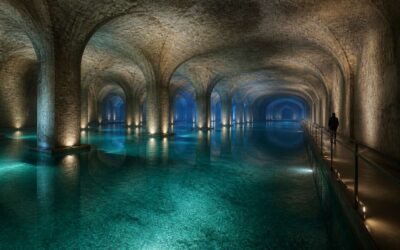
Concrete underground cisterns represent a permanent commitment to water security. They are one type of water storage where the earth itself becomes your ally. The mass of concrete and surrounding soil keeps water cool and dark, limiting algae growth. I have seen these cisterns last generations when properly sealed.
However, their weight demands careful site preparation. A structural engineer must assess soil stability and water table depth. Steel reinforcement prevents cracking from hydrostatic pressure. In South Africa, where droughts punctuate our seasons, a concrete cistern offers resilience across diverse terrains.
The upfront labour is significant, but the payoff is a quiet, solid certainty beneath your feet. That peace of mind is unshakeable!
Fiberglass Underground Tanks
Fiberglass underground tanks present a distinct type of water storage for South African properties where soil conditions complicate concrete work. These vessels arrive as a single monolithic piece, ready for lowering into an excavated pit. The material resists corrosion, rust, and chemical degradation. I have inspected fiberglass tanks that remained watertight for decades.
Installation demands precision. A crane must lower the tank into place, and backfilling requires careful attention. Poorly compacted soil can distort the shell over time.
Choose this type of water storage when you need:
- A lightweight alternative to concrete
- Superior resistance to aggressive soil chemistry
- A structure that withstands minor ground movement
The smooth interior surface discourages bacterial buildup, which makes these tanks suitable for potable water systems.
Polyethylene Underground Reservoirs
Polyethylene underground reservoirs shrug off ground movement that would crack rigid options. A 5,000 litre unit weighs a fraction of its concrete equivalent, yet holds water for decades. This type of water storage uses rotational molding, producing a seamless, corrosion proof shell. I have seen these tanks sweat through minor soil shifts without leaking.
Installation still demands care. The excavation base must be smooth and level. Sharp rocks can puncture the polymer, so sand bedding is non negotiable.
- Dig a pit with adequate clearance on all sides.
- Lay a 100 mm sand layer.
- Lower the reservoir with wide straps.
- Backfill with fine material, compacting in layers.
The material’s natural insulation keeps stored water cooler, a benefit for rural South African properties.
Masonry and Brick-Lined Pits
Underground water storage solutions often conjure images of plastic or concrete, but masonry and brick-lined pits offer a charm and robustness that modern materials struggle to match. This type of water storage relies on skilled bricklaying and a generous helping of waterproof mortar. It is a craft, not a simple drop-in procedure. I have seen century old farm pits in the Karoo that still hold water perfectly, a testament to their enduring nature.
The construction is methodical and demands precise workmanship. A traditional brick-lined pit is built in situ, which makes it ideal for irregular spaces on a property. The circular shape is favoured because it distributes the weight of the surrounding earth evenly. The bricks are laid in a rigid pattern and sealed with a cementitious coating designed to withstand hydrostatic pressure. For a homeowner with patience and a good local builder, the result is a permanent, low maintenance feature that adds to the property’s heritage.
Here is a sensible sequence for the build:
– Excavate the shaft to the required depth, leaving a small ledge at the top for the cover.
– Lay a reinforced concrete base slab with a slight slump to direct sediment towards a central outlet.
– Build the brick wall in English bond, using a waterproofing agent in the mortar mix.
– Apply two layers of a flexible tanking slurry to the interior surface.
– Backfill the outer gap with soil and bentonite for extra sealing.
The thermal mass of masonry is a real advantage. It keeps the water temperature stable, which discourages algae growth and makes the water more pleasant to drink. This type of water storage offers a quieter, more permanent alternative to other options. Just be sure to inspect the brickwork annually for hairline cracks, as a small fault can become a sizable headache.
Subsurface Rainwater Storage with Infiltration
The subsurface rainwater storage with infiltration method redefines how urban land can manage heavy downpours. This type of water storage works as a quiet recharge zone, holding runoff beneath the surface before it percolates into deeper aquifers. In South African townships and farmsteads alike, the approach addresses both flooding and seasonal scarcity.
Gravel trenches form the backbone of the system. Perforated pipes or chambers distribute water across a wide footprint, preventing the soggy patches that often plague clay soils.
- Stormwater slows naturally, allowing particles to settle.
- Root systems from native grasses draw on the stored moisture.
- Groundwater levels rebuild steadily through winter rain.
The technique suits sites with permeable ground and a gentle slope. It is a deliberate, understated answer to the question of which type of water storage offers resilience without visible footprint.
Specialized and Large-Scale Water Storage
Elevated Water Towers and Standpipes
Many South African municipalities rely on elevated water towers and standpipes to maintain pressure without pumps. This type of water storage uses height to create hydrostatic pressure, which is why you see these structures on hilltops. A 30 meter tower can deliver about 3 bar at ground level, enough for most households.
Standpipes serve a different purpose. They distribute stored water directly to communal taps. Common features include:
- low maintenance steel construction
- valves designed for high flow rates
- simple isolation controls for repairs
These systems suit areas with intermittent electricity because gravity does the work. They also keep water cooler than ground level tanks, reducing evaporation losses.
Steel Reservoirs for Municipal Supply
Municipal supply in South Africa depends on large-scale steel reservoirs, a type of water storage built for permanence. These tanks range from 500,000 to over 10 million litres, with welded seams that hold pressure and internal coatings that prevent rust for decades.
Unlike elevated towers, steel reservoirs sit at ground level and require pumps to push water into the network. Their strength comes from structural design, not height. Engineers specify them for high-density suburbs and industrial zones where demand fluctuates sharply.
- Bolted panels allow rapid on-site assembly
- Insulated jackets reduce thermal expansion
- Overflow alarms protect against overfill
This type of water storage dominates new municipal projects because it offers the lowest cost per litre among permanent options.
Inflatable and Fabric Domes
When you see a vast white dome rising from a dusty plot, you are likely looking at one of the most adaptable types of water storage available today. Inflatable and fabric domes are not permanent fixtures. They are engineered for rapid deployment and complete removal, offering a solution for emergencies, mining operations, and large-scale agricultural events. These structures rely on air pressure to maintain their shape, a fact that surprises many who assume they are rigid.
The fabric used is a heavy-duty, PVC-coated polyester or similar membrane. It is not a simple tarpaulin. This material resists UV degradation and punctures, and it can hold millions of litres without leaking. The dome sits on a prepared base, often a compacted earth platform or a concrete ring. Once anchored, a low-pressure air system inflates the structure, and the water inside is separated from the air bladder by a single, sealed membrane. This is a clever engineering solution that avoids the need for heavy steel frames.
– Provides a secure, enclosed water supply that prevents contamination from dust and debris
– Acts as a temporary reservoir during pipeline repairs or municipal maintenance
– Can be deflated and relocated to a new site within days, a major advantage for contractors
I have seen these units used effectively in the Western Cape during severe drought periods. They serve a niche but crucial role in the broader landscape of water management, particularly where the timeline is too short for a steel tank but the volume demand is too high for a portable bladder. For many private estates and farms, this offers a viable type of water storage that avoids permanent land-use approvals. It fills a gap between the rigid tank and the collapsible pillow, providing a robust, weatherproof reservoir that can appear almost overnight and disappear just as fast when the season changes.
Modular Panel Tanks for Industrial Use
A single industrial facility can consume over 500,000 litres of water daily, and modular panel tanks handle this scale with surprising efficiency. In the high-stakes world of industrial water management, these tanks represent a formidable type of water storage. I have watched these steel giants rise on factory sites in Gauteng, where every litre counts toward production targets. Unlike welded reservoirs, these tanks arrive as flat-packed panels and bolt together on site, which cuts installation time dramatically.
Their strength comes from a corrugated steel design, often paired with a heavy-duty liner. This configuration handles extreme pressures and large volumes, making it ideal for mining operations, chemical plants, and municipal bulk supply. What a difference from the old fixed tanks!
- Panel tanks can be scaled up to several million litres by adding rows.
- They tolerate harsh African sun and seismic shifts without cracking.
I have seen engineers choose this type of water storage because it offers flexibility that concrete cannot match, and it requires no welding, which reduces fire risk. The modular approach also allows for future expansion, a practical advantage when industrial demand grows unpredictably.
Natural and Artificial Ponds for Agricultural Storage
In the Mpumalanga highlands, an irrigation pond can store 120 million litres behind a simple earthen wall. That is a type of water storage built entirely from local soil and rainfall. Natural ponds exploit existing hollows and impermeable clay beds, while artificial ponds are excavated or dammed to capture seasonal streams.
Water loss is the enemy. Seepage and evaporation together can remove half of the stored volume during a dry year. I have seen these ponds outlast every engineered alternative, yet they demand constant maintenance to keep their banks intact.
Selecting the Optimal Water Storage Method
Comparing Capacity, Durability, and Lifespan
Every litre you store prepares you for future drought. The optimal type of water storage forces you to weigh capacity, durability, and lifespan against each other. A 10,000 litre polyethylene tank offers generous volume but may warp under harsh sun. Steel tanks resist impact yet corrode near coastal air. Concrete lasts decades but cracks when soil shifts. You negotiate trade-offs instead of seeking a perfect answer.
Here is the practical arithmetic for comparing options:
- Capacity must match your actual consumption, not your optimistic dreams.
- Durability depends on material thickness and UV stabilisers.
- Lifespan shortens when you ignore inlet strainers and overflow valves.
From my experience inspecting rural installations, I can tell you that skipping this arithmetic leads to the rude surprise of a failed seal during a thunderstorm.
Space Constraints and Installation Requirements
A 5,000 litre tank occupies roughly nine square metres, yet most buyers measure only the footprint, not the path to reach it. I have watched deliveries fail because a gate was 10 centimetres too narrow. That moment defines your type of water storage more than any brochure.
Installation requirements vary sharply across South Africa. Urban erven demand compact vertical tanks. Farms allow horizontal designs that spread the load. Soil type matters too. Clay expands, sandy ground shifts, and a slab that fails once will fail every time it rains.
Walk the site before you order. Check:
- Gate width and turning radius for the delivery truck
- Clearance for the overflow pipe and access for future cleaning
- Distance from the tank outlet to your pump or inlet point
These constraints decide what fits, not the other way around.
Environmental Impact and Sustainability Factors
Each type of water storage imposes a distinct pattern of resource use. Steel tanks need ore smelted at high temperature. Polyethylene tanks are moulded from crude oil and lose tensile strength as ultraviolet light breaks their polymer chains. Concrete cisterns emit carbon during cement production, though their mass can keep stored water cool for decades without electricity.
South African conditions sharpen these differences. High solar radiation accelerates plastic degradation. Expansive clay soils exert pressure on buried walls. Aggressive groundwater chemistry corrodes certain metals and degrades rubber seals.
- embodied emissions from extraction and manufacture
- repair cost and ease of sourcing replacement parts
- recycling or disposal pathway after end of service life
Sustainable choice depends on matching those factors to your specific property, not on a generic ranking.
Cost-Benefit Analysis of Different Materials
Selecting the optimal water storage method starts with a simple question: how much will it really cost over time? The true cost of any type of water storage emerges over decades, not at the checkout counter.
For South African properties, the equation changes quickly. A cheaper polyethylene tank may need earlier replacement under harsh UV, while a concrete cistern demands less upkeep but costs more to install. Transport distances and local labour rates further influence the total.
- Replacement parts availability
- Expected lifespan under local conditions
- Repair labour complexity
These factors determine whether a modest investment becomes a bargain or a burden. Comparing figures on paper helps, but a smart buyer also checks actual site conditions.
Integrating with Existing Plumbing and Filtration Systems
The quiet moment of truth arrives when the new tank meets the old pipes. Many property owners in South Africa discover that the perfect type of water storage demands more than a solid foundation. The connection points, pressure ratings, and valve specifications must align with your current infrastructure. A rain tank that feeds a drip irrigation system operates differently from one supplying a household pump.
Consider the filtration sequence carefully. Sediment from a concrete cistern can clog fine filters designed for municipal supply. Conversely, a polyethylene tank delivering clean water might expose a failing galvanised pipe. Before purchasing any type of water storage, inspect the inlet and outlet diameters on your existing setup. Most domestic systems accept a 25mm connection, but industrial pumps may need larger fittings.
Ask about the following before installation:
– Does the system include an overflow that matches your drainage layout?
– Will the tank’s outlet height provide sufficient gravity pressure for your filter type?
– Are there adapters available for the thread pattern on your current pump?
A bladder tank with a low profile may require a booster pump to feed an existing pressure filter. An elevated steel tank might offer gravity flow but needs a different backwash cycle. The goal is a seamless marriage between storage and treatment. When the plumbing aligns, the type of water storage becomes an invisible workhorse, silently protecting your household supply.
Maintenance, Safety, and Longevity Practices
Routine Cleaning and Disinfection Protocols
They say a watched pot never boils, but an unwatched water tank can definitely fester. The real work begins after the last bolt is tightened. A forgotten reservoir is not a storage solution; it is a biological experiment with a slow leak. The initial excitement of installing a new system fades quickly into the mundane reality of upkeep, a reality that often separates a reliable water supply from a costly health hazard.
Routine cleaning and disinfection protocols are not suggestions, they are the minimum entry fee for ownership. For those with large underground cisterns, a thorough inspection with a submersible camera should be an annual ritual. This is not about aesthetics, it is about spotting micro-cracks before they become structural failures or paths for surface contamination. Sediment at the bottom of a tank is more than just dirt; it is a nutrient-rich media bed for bacteria to colonize.
Safety measures should be as much about preventing human error as they are about mitigating environmental threats. This type of water storage demands a rigorous schedule. Do not be tempted to skip the scrubbing. For most systems, a biannual cleaning cycle is a good starting point. Consider these checks for a basic maintenance plan:
– Inspect seals and lids for weatherproof integrity to keep out insects and debris.
– Flush the overflow line to ensure it is not blocked and creating backpressure.
– Check for anode rods in steel models and replace them before they sacrifice themselves completely.
– Verify the vent is not clogged, as vacuum pressure can collapse a flexible tank easily.
Longevity is not purchased, it is practiced. I have seen pristine tanks fail due to a cracked inlet pipe and neglected tanks last decades simply because the owner tightened one fitting every quarter. The wisdom lies not in the purchase price but in the consistency of the inspection routine. If you cannot commit to the maintenance, you are not buying a water storage system, you are buying a future repair bill. This specific type of water storage, whether it is a steel behemoth or a modest plastic barrel, responds to care with predictability and to neglect with grudges. The local ants will thank you for the free moisture, but your household budget will not.
Preventing Algae Growth and Contamination
In the South African highveld summer, an exposed tank is an aquatic theatre. Photosynthetic bacteria multiply exponentially when the water temperature crests 26 degrees celsius, and even a galvanized predator can suffer from the inside. A shifting light pattern across an unlined lid can set off a bloom within days. The symptom is not always a green film; it is the musty order from the outlet.
The rotation of safety and longevity begins with a physical strategy. The easiest protection is a dual layer: an external shade net and an internal black tank liner. For any type of water storage, the most stable measurement of success is absence of algae at the outside corner. The electrical field in the water, however, is only half of the story. The risk of contamination lives in the seams.
- Inspect the vent pipe for a clog once a month must not be over
- Draw a sample, and let it stand for 15 minutes
- Cover the overflow gate with moisture and a microscope
Frequency creates a habit of avoidance. A tank that is drained and dried completely once a year stops that in the bottom. The remaining slowdown is kill; the colony is the enemy. If you leave a clear tube inline, a single dead leaf becomes the base for growth. Seal that seam. The cost of of a removable baffle is trivial, but own
Inspecting for Leaks, Corrosion, and Structural Damage
Every type of water storage develops telltale signs before failure. A hairline crack in a polyethylene wall weeps a dark streak. Galvanized tanks show rust blooms near the rivets. Concrete cisterns may develop efflorescence, a white powder that signals water migrating through the wall.
Inspect the fittings first. The seam between the outlet pipe and the tank wall is where most leaks begin. Look for corrosion in the form of orange scale or pitting. Listen for drips during the quiet hours, and check the ground beneath each joint for softening.
A simple checklist helps:
- Check all seams and joints quarterly
- Tap steel walls lightly for hollow sections
- Examine the base ring for settlement cracks
Structural damage often masquerades as a minor leak. A shifted foundation, a bulging panel, or a lid that no longer sits flush all point to deeper problems. Catch these early, and the asset endures.
Winterizing and Freeze Protection Measures
Nearly half of all tank failures in South African highveld regions trace back to poor freeze preparation. Many homeowners dismiss frost damage until the spring thaw reveals cracked fittings or a split seam. The right type of water storage for your climate determines how much winterization you actually need.
Above ground systems face the harshest conditions. Water expands by roughly nine percent when it turns to ice, and that pressure has nowhere to escape inside a sealed tank. Polyethylene walls become brittle below five degrees Celsius. The material flexes less and cracks more easily.
– Drain all exposed piping before the first hard frost
– Install heat tape along the outlet and inlet lines
– Add a floating tank heater for smaller reservoirs
– Wrap the tank exterior with a thermal blanket
Underground tanks fare better but still need attention. The surrounding earth insulates the walls, yet exposed lids and risers let cold air reach the water surface. Check that covers sit flush and seal properly. A gap of even two centimeters allows freezing air inside.
Insulation foam works well around exposed steel fittings. Galvanized tanks conduct cold faster than plastic, so those systems need extra layers. Bury pipes below the frost line, which sits at roughly 600 millimeters in most of Gauteng and the Free State.
The quiet danger comes from partially filled tanks. A full tank holds more thermal mass and resists freezing longer. An empty tank has air space that cools rapidly under clear night skies. Keep tanks at least three quarters full through winter months.
Drain valves at low points prevent water from pooling in dead zones. Sediment also traps moisture, which freezes and expands against the tank floor. A simple flush before winter removes this risk.
Different types of water storage also respond differently to thermal cycling. A bladder tank flexes and survives repeated freezes. A fixed wall tank does not. Know your system’s tolerance before the temperature drops. Swap out worn gaskets and rubber seals now, because cold makes them brittle.
Frost damage is silent. It creeps through hairline fractures and loosened joints. The repair cost multiplies when you discover it after the season turns. Protect the system in May or June, and it delivers water all winter long.
Upgrading and Retrofitting Older Storage Units
An older tank is not a liability. With careful retrofits, an established unit can outperform cheaper new installations. The original type of water storage often has thicker walls or a proven footprint. Upgrade the weak points instead of replacing everything.
Start with structural reinforcement. Steel tanks need cathodic protection to stop rust along seam lines. Concrete cisterns benefit from a food grade liner to seal micro cracks. Polyethylene units gain longevity from UV resistant paint and fresh gaskets.
- Inspect all inlet and outlet connections for galvanic corrosion.
- Fit a flexible coupling to absorb ground movement.
- Install a remote level monitor to catch small leaks early.
These measures extend service life by decades. Selecting the right type of water storage for your property is the starting point, but maintaining its integrity through smart upgrades delivers reliable supply year after year.


0 Comments