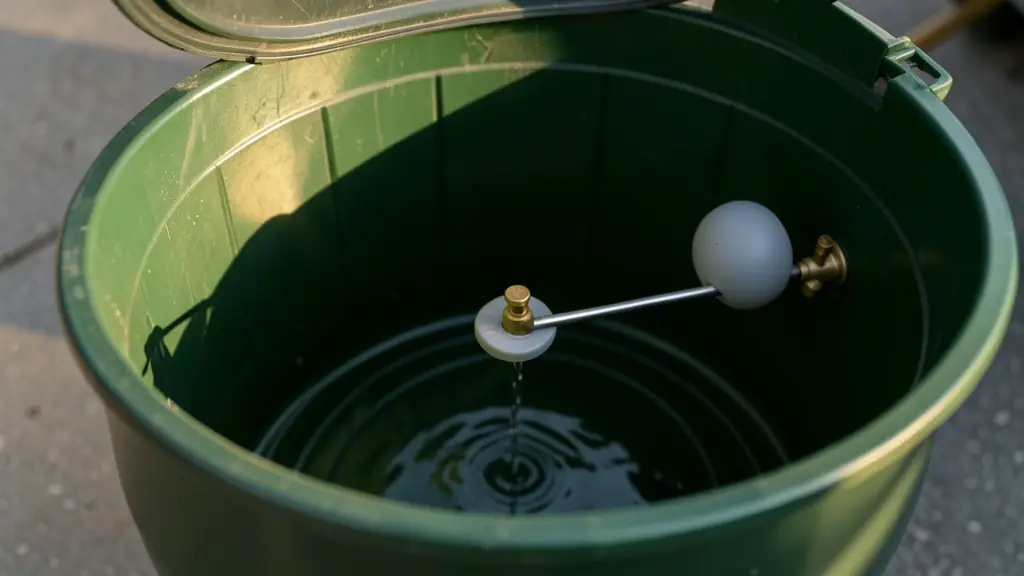
A float valve is the small part that keeps a tank from flooding the yard: a float rides up on the water, lifts an arm and closes the valve when the tank is full. Plumbers and tank dealers call it a ball valve too. You find one in every toilet cistern, on cattle troughs and in any water tank with a float valve that tops up from the mains. Picking the wrong seat for your pressure is the usual reason one hisses all night.
Price guideAbout R140 to R340 for a 15 to 25 mm brass float valve, R660 to R940 for larger brass and heavy duty valves and about R1,020 for a 32 mm PVC valve, VAT includedA rough guide from published South African prices. The area, the term, the grade, what is included and VAT all move it.
Brass, plastic and the seat inside
Brass bodies last longer in the sun and on a farm trough where cattle push them about; plastic bodies cost less, never corrode and suit cisterns and small tanks. What matters more is the seat, the small hole the washer closes against:
- High pressure seat: a small hole for mains pressure, roughly 2 to 6 bar.
- Low pressure seat: a bigger hole for a supply fed by gravity from a tank or a hill.
A low pressure seat on strong mains will hammer and leak; a high pressure seat on a gravity line fills a trough painfully slowly. Many come with both seats in the box.
Sizes, troughs and equilibrium valves
Houses mostly use 15 mm (half inch) and 20 mm (three quarter inch) valves to match the pipe. A stock trough on a smallholding or a big reservoir fed by a 25 mm or 40 mm line needs more flow than an ordinary arm can shut against. That is the job of an equilibrium valve: water pressure balances on both sides of the piston, so a small float closes a big flow. A ball valve for a tank is also not the same as a float switch, which turns a pump on and off with a cable; see water level sensors.
Why float valves stick, drip and flood
The common causes are grit on the washer after the municipality flushes the mains, a float that took on water through a crack, an arm bent by someone climbing the tank, and lime scale on hard borehole water. Bend or adjust the arm so the valve closes about 50 to 100 mm below the overflow. That gap matters: the overflow is the safety net, and it must lead away from the house and the base, never into the foundations.
The float valve in a backup tank
In a home system the mains fills the tank through the valve and a pump sends water to the house. The valve decides how fast the tank refills when the water comes back after an outage, so a slow seat can leave you short before the next cut. Read how the parts fit together under backup water systems, and check the refill time with the tank fill time calculator.
Who asks for this
- Homeowners and tenants
- A ball valve on the inlet of a backup tank that tops up from the municipal mains.
- Complexes, estates and landlords
- Valves in each block's tanks and toilet cisterns, checked when the overflow pipes run.
- Builders and plumbers
- Fitting the right seat at plumbing stage so the new tank stops cleanly when full.
- Shops, restaurants and offices
- A tank on the roof of a shop or restaurant that refills itself after every outage.
- Farms, plots and lodges
- Brass valves on cattle and game troughs fed by gravity from a hillside reservoir.
- Factories, mines and plants
- Equilibrium valves on large process and fire water tanks fed by a big supply line.
- Schools, clinics and municipalities
- School and clinic tanks that must refill overnight without anyone watching them.
- Events, sites and relief
- Temporary tanks at a camp or a site kept topped up from a standpipe or a bowser.
Frequently asked questions
My float valve drips into the overflow. Do I need a new one?
Often not. Turn off the supply, open the valve, clean the washer and the seat, and check the float is dry inside. Replace the whole valve when the body is cracked or the arm pivot is worn loose.
Can I fit a float valve to a plastic water tank myself?
Many tanks come with a hole and a bulkhead for the inlet, and fitting the valve to it is simple. Connecting the tank to the municipal supply is plumbing work: ask a plumber, who also fits the non-return valve the municipality wants.
What float valve do I need for a cattle trough?
A brass valve with a short, sturdy arm or a covered float that animals cannot knock, sized to the pipe and with the seat matched to the pressure. Long gravity lines from a reservoir usually want the low pressure seat.
Do you sell float valves?
No. We stock nothing. Tell us the pipe size and the pressure, and a few hardware stores, tank dealers or plumbers close by will price the valve and the fitting.