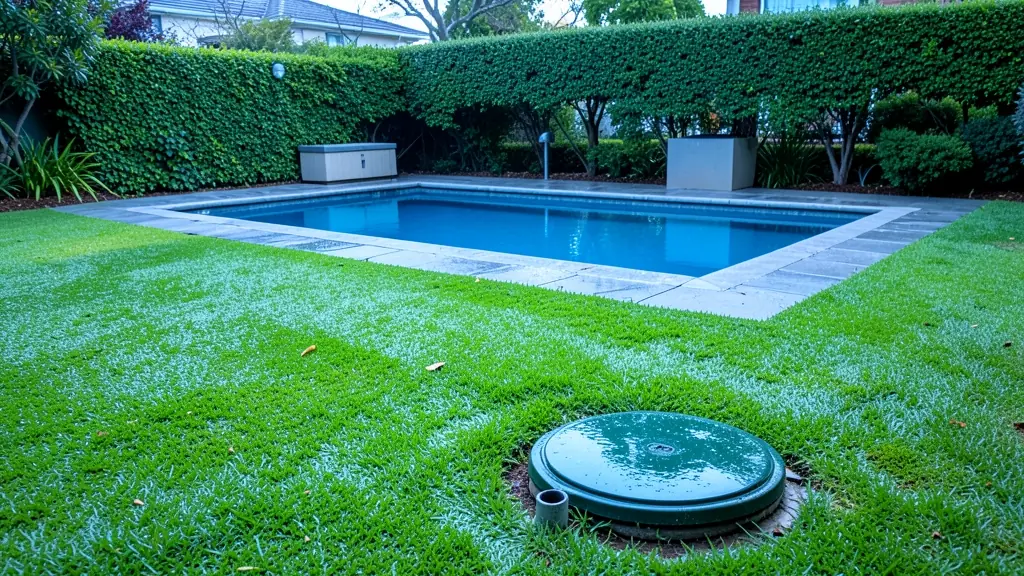
An underground water tank puts the storage below the lawn, the driveway or the pool deck, where a standing tank would be in the way or against estate rules. It keeps the water cool and dark, which slows algae, but it costs more than a tank on a slab: there is a hole to dig, a tank made for burial, and a pump to bring every litre back up. Here is when it is worth it and what can go wrong.
Price guideA purpose made underground plastic tank costs about R4,037 for 600 L, R5,394 for 1,000 L, R14,042 for 2,500 L and up to R67,666 for 12,500 L, before digging and installationA rough guide from published South African prices. The area, the term, the grade, what is included and VAT all move it.
When to go underground
Underground storage suits a small stand with no side passage, a pool area you want kept open, an estate whose rules forbid tanks the street can see, or a body corporate that wants a large shared tank. A Fourways complex of 40 units might put 20,000 L under the visitors' parking. If you have space and no rules against it, a plastic tank on a slab or a slimline tank on the wall is cheaper and easier to reach.
Buried plastic, concrete or brick
- Purpose made underground plastic tanks: ribbed or domed polyethylene rated for burial, with a riser for the manhole. Follow the maker's bedding and backfill instructions to keep the warranty.
- Ordinary above ground tanks: never bury one. The soil pushes the walls in and it can collapse, especially when empty.
- Concrete underground water tank or brick reservoir: built in place or from precast sections, for big volumes. It needs a waterproof lining and, for any size or load, an engineer's design.
The hole, groundwater and safety
The excavation is often the biggest cost after the tank: a digger, carting away soil, a level bed of sand or concrete and careful backfill. Ask whether rock is likely, because that changes the price. Where the water table is high, an empty plastic tank can float up and break its pipes, so installers anchor it or set it in a concrete slab. Keep the manhole lid child safe and locked, and never let anyone climb into a buried tank alone: it is a confined space with little air.
Pumping it up and knowing the level
Water does not run uphill, so an underground tank always needs a pump: a submersible inside the tank, or a surface pump with a foot valve on the suction pipe. A surface pump struggles once the lift gets deep, so ask the pump shop. The pump needs dry run protection, and a plumber links it to the house. Because you cannot see the water, fit an underground water tank level indicator. Size the tank on the water tank size calculator and the pump with pressure pumps.
Who asks for this
- Homeowners and tenants
- A buried tank under the lawn on a small stand with no side passage.
- Complexes, estates and landlords
- A shared tank under the parking that supplies every unit through an outage.
- Builders and plumbers
- A burial rated tank planned in before the paving goes down on a new house.
- Shops, restaurants and offices
- Storage under a car wash bay or restaurant yard where space is all used.
- Farms, plots and lodges
- A concrete reservoir dug in below a homestead to keep water cool.
- Factories, mines and plants
- A concrete underground tank holding fire water under a warehouse yard.
- Schools, clinics and municipalities
- A buried tank at a school sports field kept out of reach of pupils.
- Events, sites and relief
- A buried tank at a wedding venue that keeps the gardens tidy for photos.
Frequently asked questions
Can I bury a normal plastic tank?
No. A tank made to stand in the open is not built to take the push of the soil, and it can cave in. Only bury a tank the maker rates for burial, and follow its installation guide.
Is an underground water tank much more expensive?
Usually, yes. You pay for the stronger tank, the digging, soil removal, backfill, a pump and a level sensor. Ask each quote to price the hole and the tank as separate lines.
Can a below ground rainwater tank take the roof water?
Yes, the downpipes are piped below ground to the tank, with a first flush diverter and a mesh screen on the way in, and the overflow must have somewhere to go, often the stormwater drain.
Who will quote me?
Tank dealers and installers with diggers in your region see the litres, the spot and the soil you describe, then price the hole and the tank. We dig nothing.
Related topics
Work it out first
- Tank volume calculatorA round, square or lying tank's size and the water depth in: the litres it holds full, the litres in it now and the kL out
- Tank weight calculatorThe tank's litres, its empty weight and the size of the base in: the full weight in kg and tonnes and the load on each m² of the base out