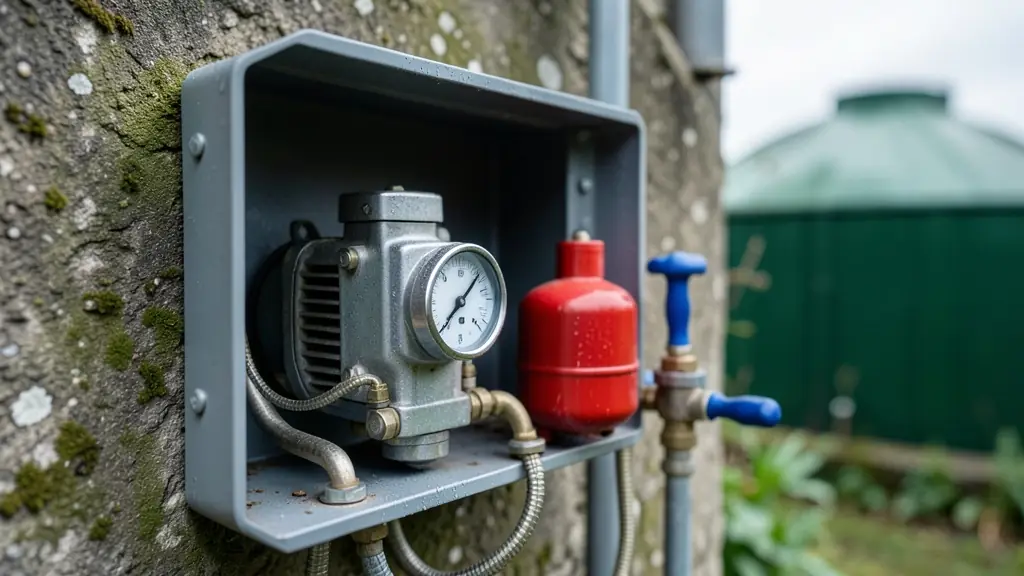
A pressure pump takes water out of a tank and pushes it into the house at a pressure the shower and the geyser can use. Without one, a ground level tank gives almost nothing at the taps. A Durbanville family with a 5,000 L tank for outages or a Soweto homeowner tired of dry taps will want a water tank and pressure pump that switch on by themselves, stay quiet and fall back to the mains. This is how they work and what to ask.
Price guideAbout R2,860 to R3,140 for a 0.75 kW pump with a flow controller or a 24 L vessel, R4,540 to R8,220 for larger vessel and VSD units, and R14,153 to R23,913 for compact all in one VSD units, VAT includedA rough guide from published South African prices. The area, the term, the grade, what is included and VAT all move it.
Switch and vessel, or a pressure controller
The classic setup is a pressure switch and a pressure vessel. The vessel holds a cushion of air and some water, so a quick glass of water does not start the pump; when pressure falls to the cut in point the pump runs until it reaches the cut out point. A bigger vessel means fewer starts and a longer pump life.
A pressure controller (a flow switch type) bolts onto the pump outlet: it senses a tap opening, runs the motor, then switches off once the water stops moving. It is compact and cheap, but a dripping tap or a leaking cistern can make it cycle all night.
Sizing for the taps you open at once
Size for the busiest moment, such as two showers and the kitchen tap together, not for the whole house. Count those outlets, add the height from the tank to the highest shower, and run the pump size calculator. Many family homes land on 0.55 to 0.75 kW. Too small and the second shower goes weak; too big and the pump short cycles and hammers the pipes.
Noise, dry running and where it goes
- Put the pump in a ventilated pump box on a level plinth, not under a bedroom window or against a hollow wall.
- Fit dry run protection: if the tank empties at 2 am, the pump must stop, not grind until morning.
- Prime it properly at start up and after any repair: fill the casing with water before switching on.
- Switch off and isolate the pump before anyone works on it.
The bypass and power cuts
Ask the plumber for a bypass, manual or automatic, so the house can run straight off the municipal supply when the pump fails or the tank is empty, with a non-return valve so tank water never flows back into the main. A pressure pump stops during load shedding unless it runs on a backup power supply sized for its start current. See backup water systems for the full layout and installation for the plumbing.
Who asks for this
- Homeowners and tenants
- A pump and vessel beside the backup tank so showers and the geyser run through outages.
- Complexes, estates and landlords
- One pump set per block or per unit, in lockable boxes the body corporate can service.
- Builders and plumbers
- The pump, vessel and bypass specified with the tank on a new house plan.
- Shops, restaurants and offices
- A quiet pump so a salon or restaurant keeps its basins working when the mains drop.
- Farms, plots and lodges
- A pressure set at the farmhouse fed from a reservoir topped up by the borehole.
- Factories, mines and plants
- Pressure sets for ablutions and wash bays on site storage, with a standby pump.
- Schools, clinics and municipalities
- A pump on the school or clinic tank so toilets and basins keep flushing.
- Events, sites and relief
- A portable pressure set on a site tank to run showers and kitchens at a venue.
Frequently asked questions
What does a pressure pump price include?
Check whether the quote is for the bare pump or a set with a vessel or controller, dry run protection, the fittings, a pump box, installation and VAT. A cheap bare pump can end up dearer once the rest is added.
Why does my pressure pump keep switching on and off?
Usually a leak (a dripping tap or a running toilet), a flat pressure vessel that has lost its air, or a pump too big for the system. Fix leaks first, then have the vessel's air charge checked.
What is the difference between a pressure pump and a booster pump?
A pressure pump draws from a tank at no pressure. A booster pump raises pressure that already exists, such as weak mains. Some models do both; tell the pump shop which you need.
Can I fit a water pressure pump myself?
Tying it into the house plumbing is a job for a registered plumber, and the plumbing certificate of compliance comes from them. The power supply to the pump is separate electrical work for a qualified person.
Related topics
Work it out first
- Pump size calculatorTaps open at once, the height to the top tap, the pipe run and the pressure wanted in: the flow, the total head and a pump kW band out
- Water pressure calculatorHow high the tank stands above the tap, on a stand or up a hill, in: the pressure at the tap in bar and kPa and the height for the pressure you want out