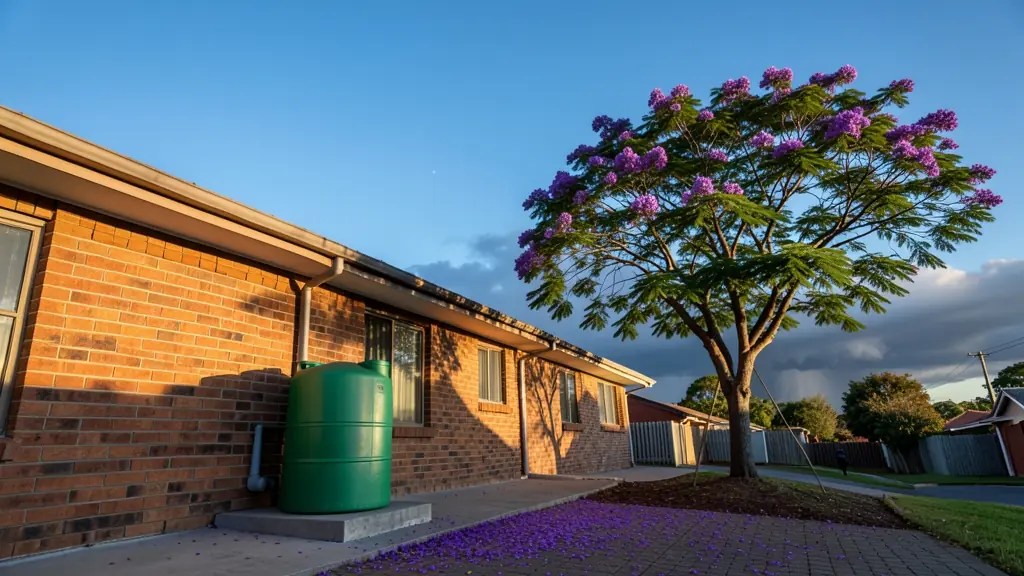
A water tank is the simplest answer to dry taps. Municipal outages, maintenance shutdowns and weak pressure at peak hours now catch many South African suburbs a few times a year, and farms have always lived on stored water. Whether you want a tank for the next outage, the summer storms or the borehole, the right one depends on how many litres you really use, where it can stand and what it must feed.
Price guideAbout R1,935 for a 1,000 L vertical plastic tank, R2,245 to R3,542 for 2,000 to 2,700 L, R5,199 to R6,150 for about 5,000 L and R17,099 to R22,398 for 10,000 L, with the base, delivery and plumbing extraA rough guide from published South African prices. The area, the term, the grade, what is included and VAT all move it.
Why people store water
Most buyers come to storage after one bad week. A Soweto household loses supply for three days while the bulk water utility repairs a pipeline; a Durbanville family wants the showers to keep running through a shutdown; a smallholding needs a reserve between borehole pumping cycles. Others catch rain off the roof for the garden, or keep fire water for a factory. Name your reason first, because it decides the size, the type and the pump.
The main kinds of water storage tank
- Plastic water tanks: round, rotomoulded and UV stabilised, the green tank most homes buy.
- Slimline tanks: flat tanks for a narrow side passage.
- Steel tanks: corrugated reservoirs and pressed steel towers for farms, schools and plants.
- Underground tanks: buried out of sight where the yard is full.
- Containers, drums and IBCs: small, portable emergency storage.
Litres, space, base and plumbing
Work out a daily figure with the water tank size calculator, multiply it by the days you want covered, then check the spot: the gate width, the truck access and a level, solid base. A full tank weighs about a tonne per 1,000 L, so run the tank weight calculator before choosing a stand. A tank only helps once the outlet, the overflow and usually a pump are connected, which is plumbing work; see water tank installation.
Where to buy a water tank
Tanks for sale turn up in a hardware store yard, at a tank dealer who stocks many sizes and colours, at a farm co-op and through plumbers who supply and fit. Prices for the same litres vary with the wall, the warranty and delivery, so one request to several sellers shows the spread quickly.
Who asks for this
- Homeowners and tenants
- A reserve for municipal outages and low pressure, or rain off the roof for the garden.
- Complexes, estates and landlords
- Shared storage for a block or estate so units keep flushing during a shutdown.
- Builders and plumbers
- Tanks specified on a new house plan with the base, the overflow and the plumbing.
- Shops, restaurants and offices
- Enough stored water to keep a restaurant, salon or car wash trading through an outage.
- Farms, plots and lodges
- Stock water, borehole reserves and irrigation storage far from any municipal line.
- Factories, mines and plants
- Fire water and process water storage sized by the engineer for a plant or mine.
- Schools, clinics and municipalities
- Backup storage for a school, clinic or church hall so toilets and taps stay open.
- Events, sites and relief
- Temporary tanks on a site or venue, filled by a water carter before the day.
Frequently asked questions
Does waterstorage.co.za sell water tanks?
No. We are a free request service: we sell no tanks and fit none. Your single request goes to independent tank dealers, hardware stores and installers working near you; they send their quotes straight to you.
What should my request say?
The litres, the type (round, slimline, steel), how many, your town, the access to the spot, whether the dealer only delivers or also fits it, and the date you need it. Photos of the site help.
Is tank water safe to drink?
Municipal water stored in a clean, closed, food grade tank usually stays fine for a while if you use and refill it. Rainwater and borehole water need treatment and a test before anyone drinks them.
Do I need permission for a tank?
A standalone garden tank rarely needs anything, but a tank plumbed into the house, or fed from a borehole, may need registration. Check with your municipality and let a registered plumber do the connection.
Related topics
Work it out first
- Water tank size calculatorPeople, litres a day, days to cover and the garden in: the litres to store, a tank combination and how long a tank lasts out
- Rainwater harvesting calculatorRoof area, roof type and your town's rainfall in: the litres a year and a month off the roof, the wettest month and a tank size out
- Tank volume calculatorA round, square or lying tank's size and the water depth in: the litres it holds full, the litres in it now and the kL out
- Water usage calculatorShowers, baths, flushes, laundry, dishes, the hose and the people in: litres a day and a month, the biggest uses and the monthly bill out
- Water pressure calculatorHow high the tank stands above the tap, on a stand or up a hill, in: the pressure at the tap in bar and kPa and the height for the pressure you want out
- Tank weight calculatorThe tank's litres, its empty weight and the size of the base in: the full weight in kg and tonnes and the load on each m² of the base out