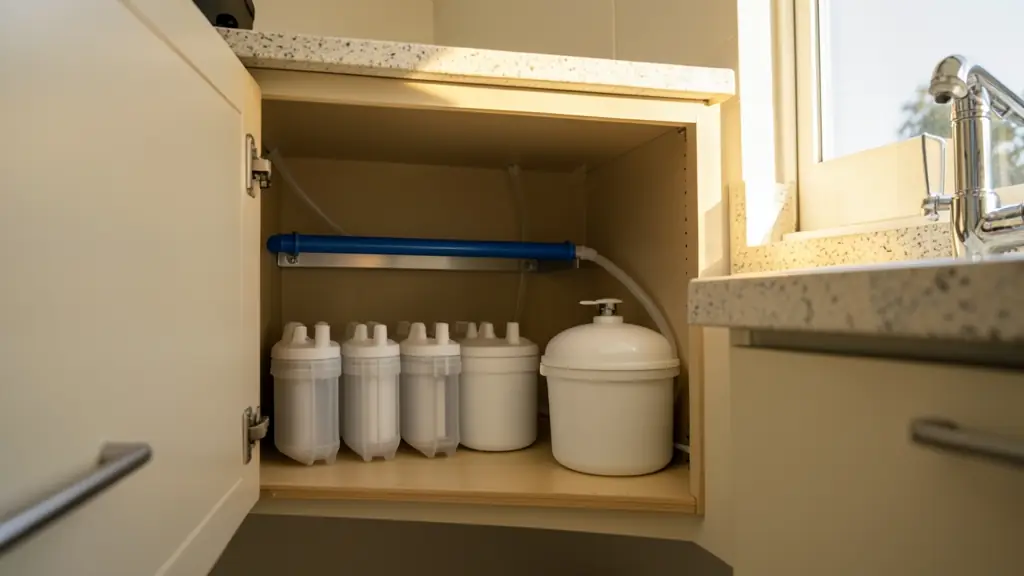
A reverse osmosis water filter pushes water through a membrane so tight that most dissolved salts, nitrates, fluoride and heavy metals stay behind, leaving water that tastes clean and a little flat. In South African homes it usually sits as an under counter unit with its own small tap; coffee shops fit one for the espresso machine, while lodges and water shops run bigger plants. Before you buy, know what RO costs you in water, pressure and spares.
Price guideA 5 stage under counter reverse osmosis unit costs about R1,668 on special to R2,299, VAT included, with a model that has its own pump at about R2,243A rough guide from published South African prices. The area, the term, the grade, what is included and VAT all move it.
How a reverse osmosis system works
Most home units have four or five stages in a row of housings:
- Sediment filter, often 5 microns, to stop sand and rust.
- Carbon (GAC or carbon block) to take out chlorine, which would ruin the membrane.
- The RO membrane, the stage that does the real work and lowers the TDS.
- A post carbon to polish the taste on the way to the tap.
A remineraliser often follows, and a small pressure tank under the sink holds a few litres because the membrane works slowly. Compare water filters and water purification systems.
The water that goes down the drain
An RO membrane keeps itself clean by flushing the rejected salts away, so every unit sends some water to the drain. Older and cheaper units can waste three or four litres for each litre you drink, and nobody notices because it trickles quietly into the sink trap. Ask every supplier for the reject ratio at your pressure, not the best case on the box. On tank water in an outage that matters: check daily use with the water usage calculator, or run the drain line to a garden bucket.
Pressure, a booster and borehole water
The membrane needs push. Most home units want roughly 3 bar or more; below that the small tank fills slowly and the waste climbs. A house on a pressure pump is usually fine, but a gravity tank on a stand gives far too little, so the unit needs its own small pump (see booster pumps). On borehole water with high TDS, RO is often the only treatment that makes it pleasant to drink, yet iron, manganese and hardness will clog a membrane in weeks. Take those out upstream with the train on the borehole water filters page.
Under counter, coffee machine or plant size
- Under counter units for a kitchen: the housings, the membrane, a small tank and a separate drinking tap through the sink or counter.
- Coffee and ice machine units, often with a blending valve, because water that is too pure can attack a boiler and makes dull coffee; ask the machine supplier what TDS it wants.
- Commercial plants on a frame for water shops, lodges, clinics and small factories, rated in litres a day, with a storage tank, a pump and usually a UV steriliser after.
Cartridges often last 6 to 12 months and a membrane 2 to 3 years; price a full set of spares before you pick a unit.
Who asks for this
- Homeowners and tenants
- A compact unit beside the sink trap feeding a slim chrome tap for the kettle and the pot.
- Complexes, estates and landlords
- A small plant for a guest house kitchen, or a unit per flat where the body corporate allows.
- Builders and plumbers
- A drain point, a cold water tee and a counter hole planned into a new kitchen.
- Shops, restaurants and offices
- RO water for coffee and ice machines, salons and a small water shop counter.
- Farms, plots and lodges
- A plant that makes salty borehole water drinkable for a lodge or a farmhouse.
- Factories, mines and plants
- Process water for food plants, laboratories, boiler feed and a spot free car wash rinse.
- Schools, clinics and municipalities
- Drinking water for clinics, schools and community kitchens on borehole or tank water.
- Events, sites and relief
- A trailer plant turning tank or borehole water into drinking water at a remote camp.
Frequently asked questions
Is reverse osmosis water safe to drink?
RO removes most dissolved salts and many contaminants, and a sound membrane stops most bacteria, but a tiny tear or a dirty storage tank can let them through. On rain or borehole water, put a UV steriliser after the membrane and send a sample for a SANS 241 lab test first.
Does a reverse osmosis water purification system remove the minerals I need?
It removes most of them. Food supplies most of the minerals people need, and a remineralising cartridge returns some calcium and magnesium for taste; ask if the quoted unit has one.
Can I fit a water filter under counter myself?
A handy person can connect a simple under counter unit to a cold water tee and a drain saddle on the sink waste. Drilling a stone counter for the tap, or anything feeding a business machine, is better left to a plumber, who also checks for leaks under pressure.
Who will quote me for a reverse osmosis system?
Filter shops and water treatment companies near you; this site stocks no units. Say whether it is for a kitchen, a coffee machine or a shop, what your water source is, and the TDS if you know it.
Related topics
Work it out first
- Water tank size calculatorPeople, litres a day, days to cover and the garden in: the litres to store, a tank combination and how long a tank lasts out
- Rainwater harvesting calculatorRoof area, roof type and your town's rainfall in: the litres a year and a month off the roof, the wettest month and a tank size out
- Tank volume calculatorA round, square or lying tank's size and the water depth in: the litres it holds full, the litres in it now and the kL out