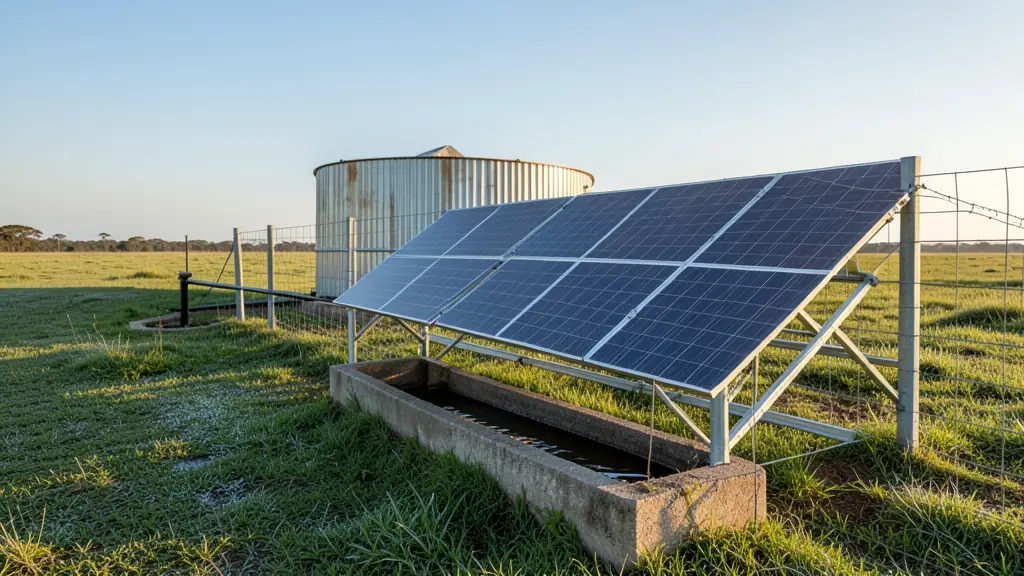
A solar water pump runs straight off panels through a controller and moves water while the sun shines, so the store of energy is the tank, not a battery. That makes a solar powered water pump a good fit for a borehole far from the grid, a dam on the farm or a big garden tank. This page is about the power side: panels, controllers, output across the day and protecting the gear.
Price guideA solar borehole pump kit with a controller costs about R5,999 to R16,621 for household sizes, usually without panels, and an installed system with panels about R25,000 to R120,000 including VATA rough guide from published South African prices. The area, the term, the grade, what is included and VAT all move it.
How the pieces fit together
- Panels: a small array on a frame or pole, angled north. The pump's kW sets how many panels you need, with spare capacity for winter and haze.
- MPPT controller: squeezes the most out of the panels as the light changes, starts the pump softly and protects it from dry running.
- The pump: a DC submersible for a solar borehole pump, or a surface pump for a dam or river. Some systems drive an AC pump through a solar drive.
- Float switch: in the tank, telling the controller to stop when it is full.
Why the tank replaces the battery
Batteries add cost, need replacing and get stolen. A reservoir high enough to feed troughs or the house by gravity stores the day's pumping for the night and a cloudy spell. Size it for two or three days of use, then size the pump to refill it on a sunny day. The tank fill time calculator shows how many hours a flow needs to fill your tank.
Mornings, clouds and the yield
A solar pump starts slowly after sunrise, peaks around midday and fades in the late afternoon. On an overcast summer day in the Highveld it may give half its rated flow or less. Plan on five to six good pumping hours, fewer in winter. On a borehole, the pump must still stay under the yield, exactly as a mains powered borehole pump must.
Solar borehole pump kit price against a designed system
Kits bundle a pump, controller and a set number of panels, priced per kit by kW and head. They suit a typical hole and a simple lift. A designed system is worked out from your yield, depth and daily litres, and is often better value on deep or long runs. Ask about the frame, the cable, the float switch and installation, then add fencing, because panels on a remote camp disappear. Compare with other water pumps if you do have grid power.
Who asks for this
- Homeowners and tenants
- A small solar pump moving rain tank water to the vegetable beds without the grid.
- Complexes, estates and landlords
- An estate filling a garden reservoir by day so irrigation keeps going in outages.
- Builders and plumbers
- A rural build where the borehole is far from any power and needs solar from day one.
- Shops, restaurants and offices
- A nursery or guest farm running water by day without a big monthly power bill.
- Farms, plots and lodges
- Remote borehole pumps filling reservoirs and troughs for livestock and game camps.
- Factories, mines and plants
- A remote site or pipeline camp pumping water to storage where no grid reaches.
- Schools, clinics and municipalities
- A rural school or community garden with a solar borehole feeding a raised tank.
- Events, sites and relief
- A bush venue topping up tanks by day for guests without running a generator.
Frequently asked questions
Does a solar water pump work without batteries?
Yes. Most farm and garden systems run directly off the panels by day and fill a tank. Batteries are only needed if you must pump at night, and they add cost and upkeep.
How many panels does a solar borehole pump need?
It depends on the pump's power, the head and how much water you need each day. The supplier works it out from your borehole depth, yield and tank height, with spare capacity for winter.
Will my solar powered water pump run during load shedding?
Yes, that is one of its strengths: it does not use the grid at all. It stops only when the light is too weak or the tank float switch says the tank is full.
How do I stop the panels being stolen?
Anti theft bolts, a welded frame on a tall pole, a fence and a cage over the controller all help. Ask the installer what they fit as standard, and check your farm insurance.
Related topics
Work it out first
- Water tank size calculatorPeople, litres a day, days to cover and the garden in: the litres to store, a tank combination and how long a tank lasts out
- Rainwater harvesting calculatorRoof area, roof type and your town's rainfall in: the litres a year and a month off the roof, the wettest month and a tank size out
- Tank volume calculatorA round, square or lying tank's size and the water depth in: the litres it holds full, the litres in it now and the kL out